Dravidian Culture: Colonization of India by Elam, Akkad and Ur III
Earliest Civilization in India
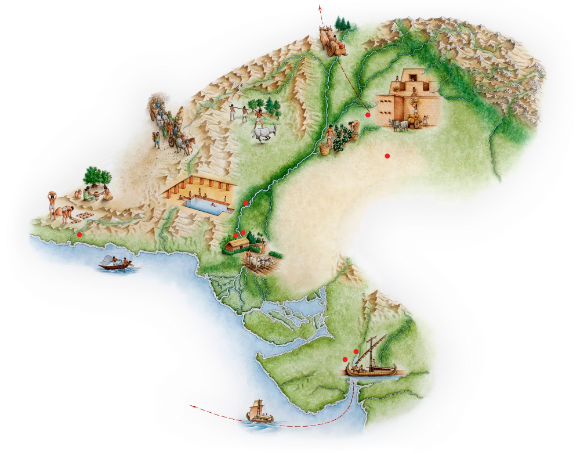
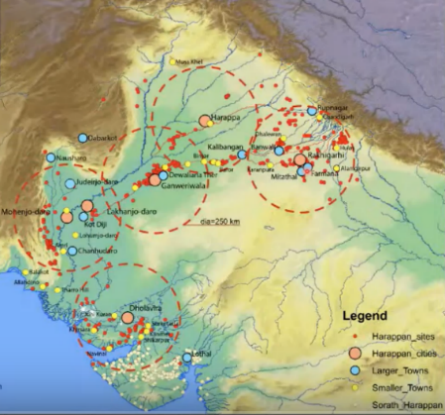
Archaeologically, the history of India begins with the Harappan Civilization (HC) popularly known as Indus Valley Civilization (3300 BC to 1300 BC). It was an advanced civilization that flourished in the region around the Indus River. The distinctive features of HC were its planned cities and seals with unique symbols. Harappa, Mohenjo-Daro, Dholavira, Lothal, Rakhigarhi are some prominent sites.
These cities were clear examples of advanced urban culture. They were some of the earliest planned cities that had rectangular boundaries with perfect ratios. It is observed that the major sites in the Harappan Civilization (HC) regions had identical design patterns. These patterns used precise ratios like 5:4, 7:11, etc to mark the external boundaries and the internal partitions for public buildings and private areas. Internally, they organized housing areas, public baths, public buildings like granaries with ventilation channels, pillared assembly halls, and roads from north-south and east-west directions that cut each other at right angles. The dockyard at Lothal and the reservoir in Dholavira, built within the city walls, are clear examples of the extreme engineering feats of the HC. Furthermore, they developed sophisticated drainage systems, in addition to rainwater catchment and diversion of channels, to supply the city with water, integrating hydraulic engineering into the overall design and planning of the site.
The houses in the housing area were typically arranged around a central courtyard, with rooms on the outside. All houses in cities had access to water and drainage facilities and a slope of an inch per meter was maintained for smooth flow. Also, a largest concentration of wells was found within HC, for example Mohenjo-daro itself had over 700 wells. The houses were constructed using mud bricks, while the drainage area was constructed using burnt bricks sealed watertight with tar or gypsum. Terracotta pipes were used to direct wastewater into open street drains. These drains were covered and flowed underground with regular inspection holes. Sewage is collected into large drains along main streets and then emptied outside the city wall. Without doubt, the most notable achievement of HC in the ancient world was the construction of urban sanitation systems.
Such an extensive construction must have been meticulously planned from the onset by a single school of architecture, as all major sites exhibit similar design patterns. In addition, they require skilled workforce for landscape design, master masons for building structures, and the admin to organize and manage the workforce and resources.
These cities would be mostly occupied by traders or artisans with specialist skills to create handcrafts, pottery, ornaments of beads, metal, precious stone, etc. Ornaments made out of seashells, pearls, ivory and precious stone beads along with gold and other metal objects have been found at these sites. The availability of precious stones in Harappa, such as lapis lazuli from Afghanistan and carnelian from Gujarat, indicates long-distance trade networks within the Harappan Civilization (HC). They exported lead, copper, gold and silver, along with wood, exotic animals and birds (like monkey, peacocks etc.). Textures found at burial sites and on terracotta figurines indicate Cotton and Silk in use and were traded from the HC. Barley, wheat, melon seeds, sesame, mustard and dates were also farmed and traded.
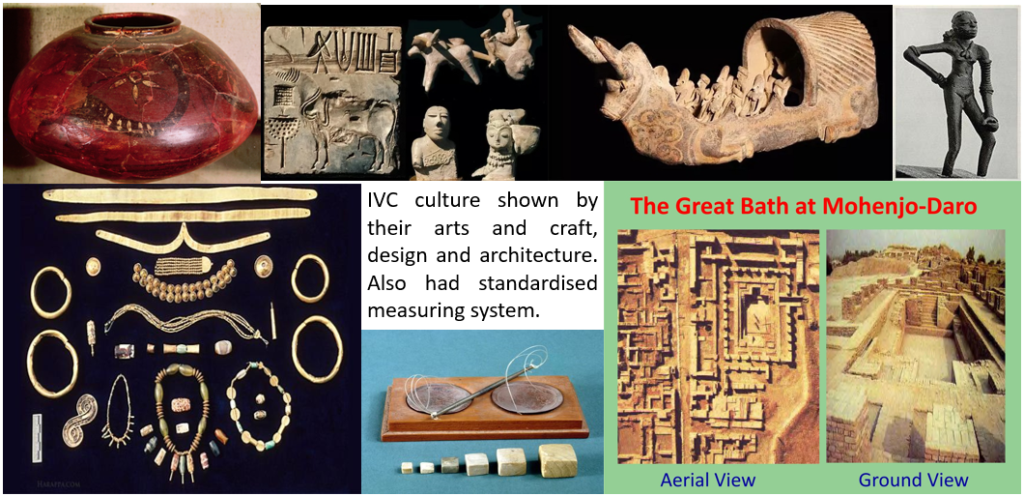
The presence of standardized weights and measures at various sites indicates the existence of a well-regulated trade system that exerted considerable control over trade. A total of 558 weights from Mohenjo-daro, Harappa, and Chanhudaro have been excavated. Various sizes starting 0.05, 0.1, 0.2, 0.5, and so on ranging in size up to 500 units, where a is unit approximately weighed 28 grams made of chert-stone were found. The presence of smaller weights suggests that the items there were being traded include luxury products.
The existence of an effective and comprehensive sanitation system and trade regulatory system may be an indicative of a functioning civic administration. The establishment of such a system would have required significant input from a central authority, given its scale and the necessity for continuous oversight to ensure smooth functioning. Some city centers, such as those of Harappa, were likely industrialized areas because they comprised of non-residential quarters, which alludes to a degree of colonization of these regions as industrial township. The level of organization and planning demonstrated to build these cities is only possible under the patronages of royal authority which had strong political will to build and finance the project. They also need to provide military/policing apparatus to support and maintain it.
Relationship with surrounding Cultures
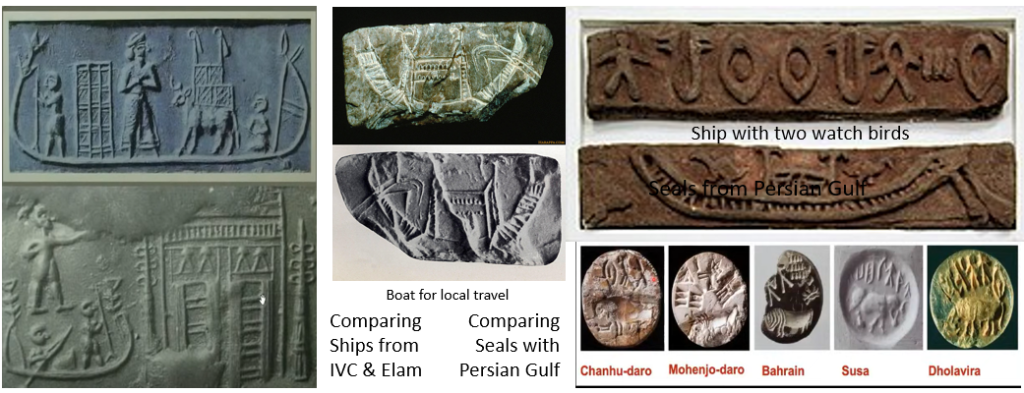
The most distinctive feature of the HC is the use of seals, written is yet an undeciphered script that depict various images including unicorns, lions, deer, and others that represent seventeen different animals. The artefacts from this region have been discovered in faraway locations like in the Persian Gulf, in Mesopotamia and even as far as Gonur Depe in Turkmenistan. Harappa, Mohenjo-daro and other cities from of HC were strategically located along trade routes connecting Mesopotamia, Central Asia and the Indian subcontinent. Images of ships and boats that look identical have been found in the Indus Valley and in Iran. Also, seals similar to the HC have been found in Susa and Bahrain, which proves that there was active maritime trade with Mesopotamia and surrounding regions. [Among them is an image of a ship with navigating birds, reminiscent to the memory of Noah’s Ark].
Meluhha
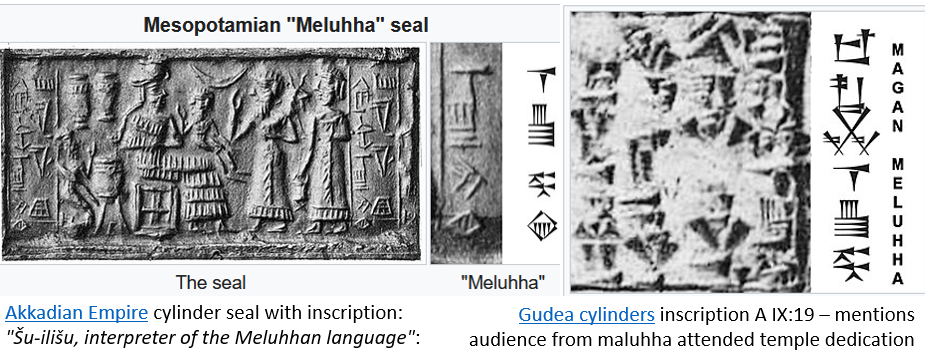
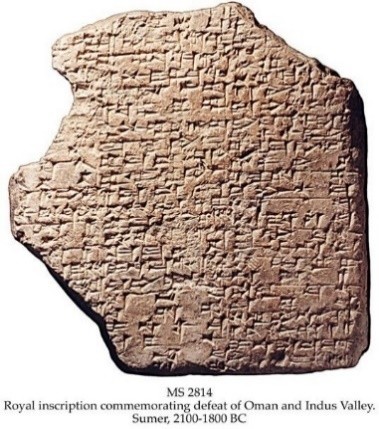
Meluhha in ancient Sumer and the Akkadian Mlakkha were known as mlechchhas in Indian texts, they seem to be part of Harappan culture. There is a reference to ships coming from Meluhha (HC), Magan (Oman) and Dilmun (Bahrain) in an inscription belonging to Sargon of Akkad (2334 BC –2279 BC). Similarly, Gudea (~2100 BC) from the state of Lagash in Southern Mesopotamia in his Gudea cylinders, mentioned his procurement of “blocks of lapis lazuli and bright carnelian from Meluhha”. Meluhha is also mentioned in mythological legend of ‘Enki and Ninhursag’ that says: “May the foreign land of Meluhha load precious desirable cornelian, perfect mes wood and beautiful aba wood into large ships for you”. One of the interesting inscriptions is of Naram-Sin the grandson of Sargon of Akkad mentions that Sargon subdued the rebel kings that includes a mention of “(..)ibra, man of Melukha”. Sargon of Akkad is the most likely candidate for Nimrod. There are also impressions of Meluhhan villages in Lagash.
Similarities with Minoan Architecture
One of the key indicators for a same school of ‘architecture and landscape design and planning’ is the similarities that have been observed across different civilization around the world. Minoan cities, Ebla and other cities exhibit similar planned landscape design that also have been observed at Harappan Civilization (HC).
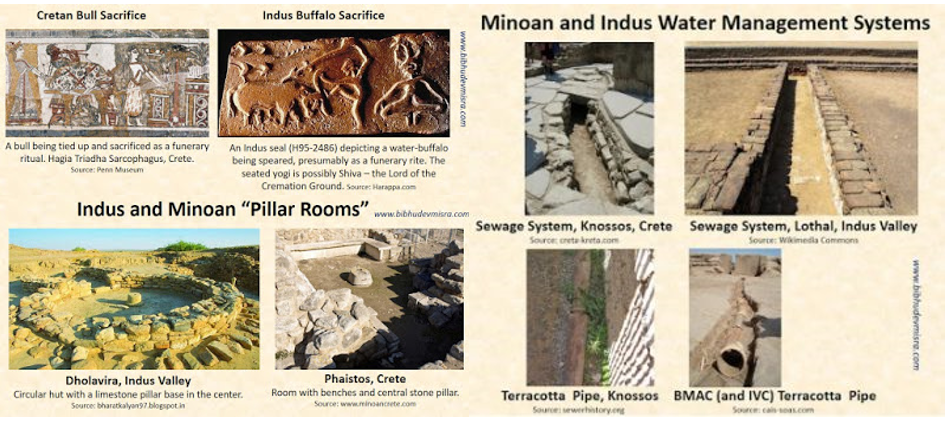
We can notice some of the structures like the pillar in grinding mill and the sanitation layout or granaries rooms of HC that look identical to Minoan civilization. Even the Bull sacrifice images have similar depiction across civilizations. Minos the founder of Minoan civilization of Crete and Menes (non-sothic chronology) the king who united upper and lower Egypt show some similarities with Manishtushu (or Rimush) battels with 32 kings on ships. Seals similar to those found at Persian Gulf have also been found at Minoan sites. All this points to a shared ancient cultural influence in building these cities all around the world. Menes also laid foundation to Tanis (biblical Zoan) and Memphis. Bible mentions Hebron (meaning united or alliance) was founded 7 years before Zoan (Num 13:22) where Abraham settled and might be involved in building it.
Harappan Culture and Practices
Since the Indus Script is not yet been deciphered, we have little context to understand their culture or their religious practices. We can only infer from various objects and structures found in Indus valley.
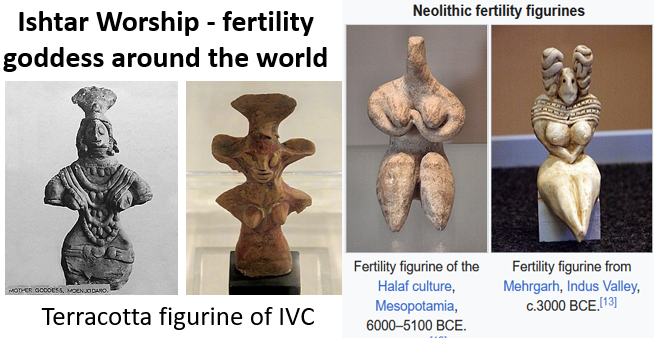
Since people as they travel would share their beliefs, we can expect some similarities with surrounding civilizations. Based on the artefacts and symbols we can draw a common thread compare them with similar practices that are documented around the world. For example, consider the female figurine found at HC, it’s a fertility symbol known in the ancient cultures across the world also recognized as mother goddess of a city (few known as Shaddai, Venus, Ishtar, Athena or Inanna that represents the nourishing nature of the town/city). Even today female deity called Devi (also known as Durga, Kali, Sakthi or Amman) is worshiped in south and east India as part of primitive non-brahminical culture.
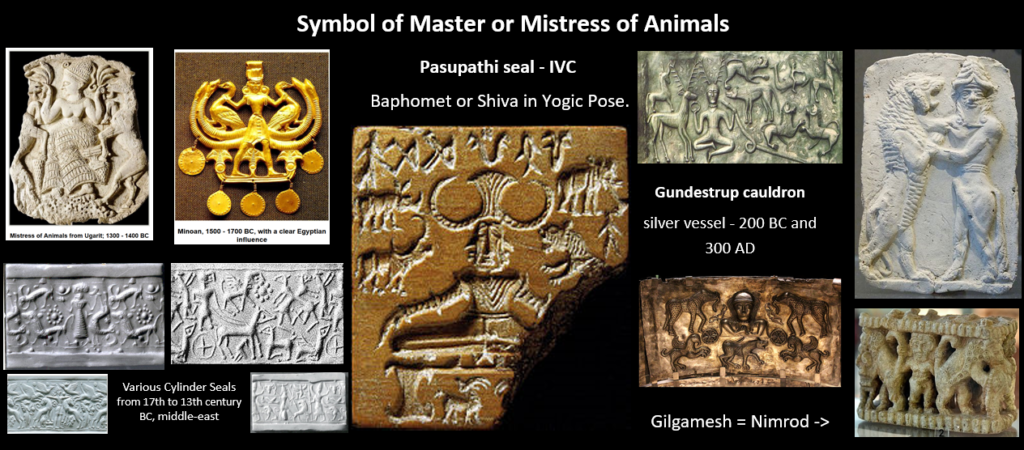
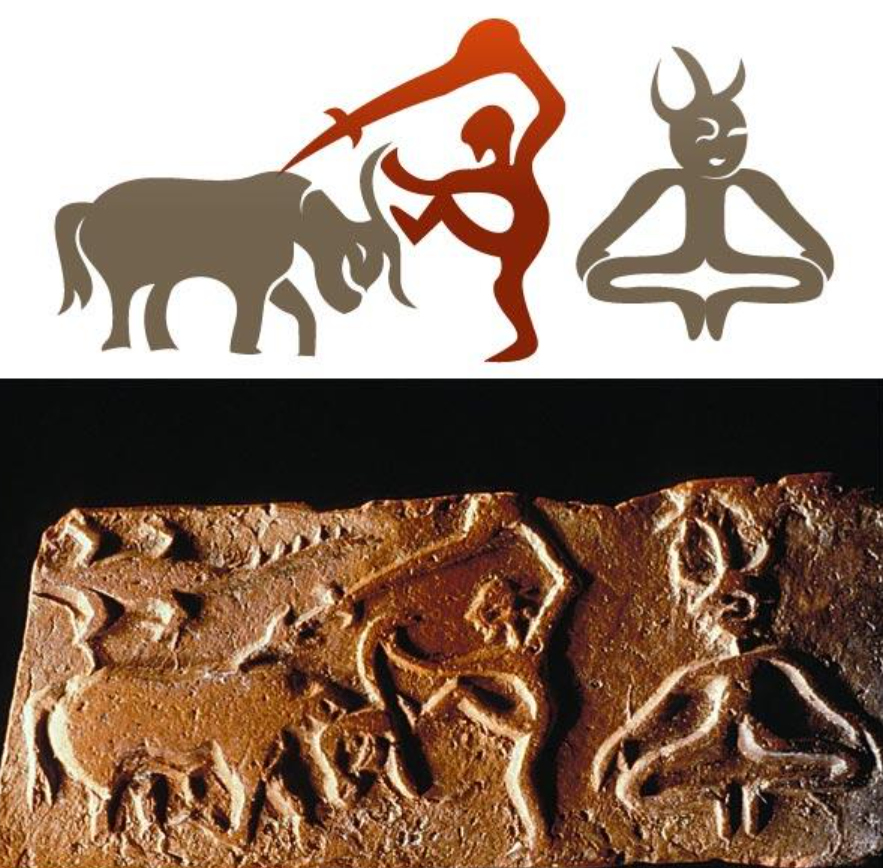
Master of Animals or Mistress of animals is another symbol also known as Lord of Beasts, depicting man or a woman surrounded by animals. One of the widely known Harrapan seal is Pasupathi seal. The image on the seal resembles a person sitting in yogic posture commonly identified with shiva. A similar form is found on Celtic silver vessel ‘Gundestrup cauldron’. This symbol resembles Baphomet and could have some connection with current yogic / tantric practices.
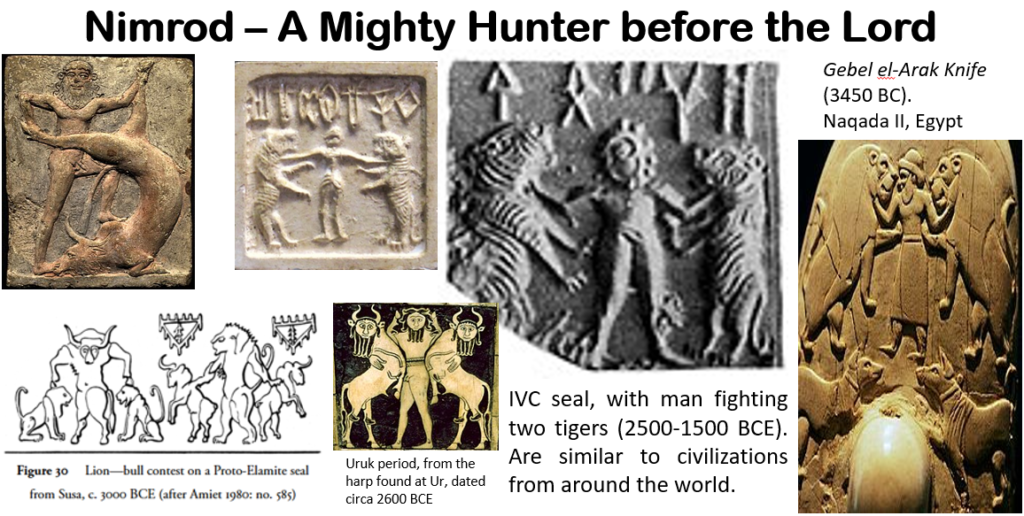
Gilgamesh Connection: Sky-bull and earth-mother are some common daities similar to Baal and Ishtar (mars and venus) in any ancient culture. Bull symbolises strength among the domesticated animals and whoever could tame it would have been regarded as Lord or Master in a tribe (probably a requirement to exercise authority over a community in ancient world). Gilgamesh considered as Biblical Nimrod is referred as ‘the mighty hunter before the Lord’. In the epic of Gilgamesh, there is a mention of Gilgamesh and Enkidu fighting the Bull of Heaven. Numerus depictions of Gilgamesh fighting lion or Bull are found throughout ancient world (maybe a ritual to toil the farm).
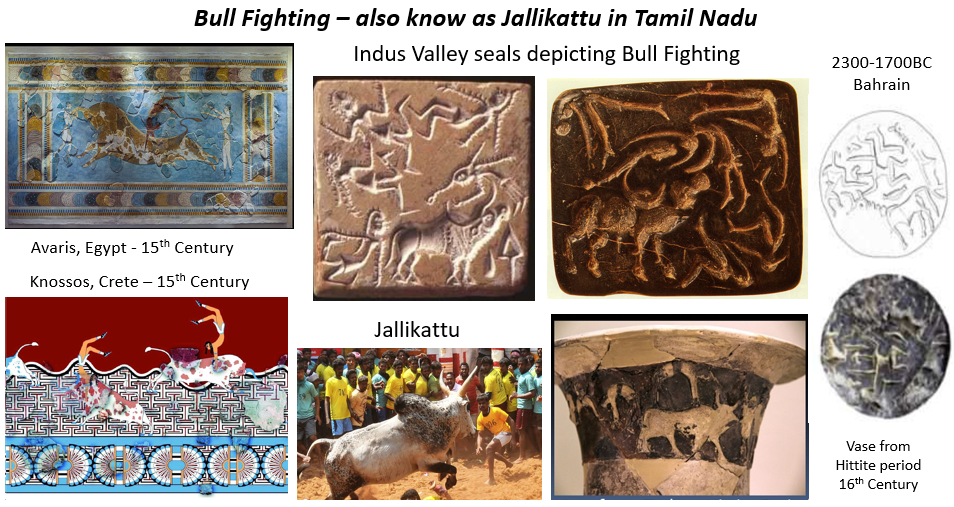
Those practices are continuing even today as traditions for example in Tamil Nadu, India there is a tribe known as Ayar who still celebrate it as Jallikattu. A reference to Jallikattu is also found in ancient Tamil Sangam literature (100 BC – 300 BC). We also see bull fighting among Spanish that was introduced by Almohad caliphs (Persians) in the early Islamic period.
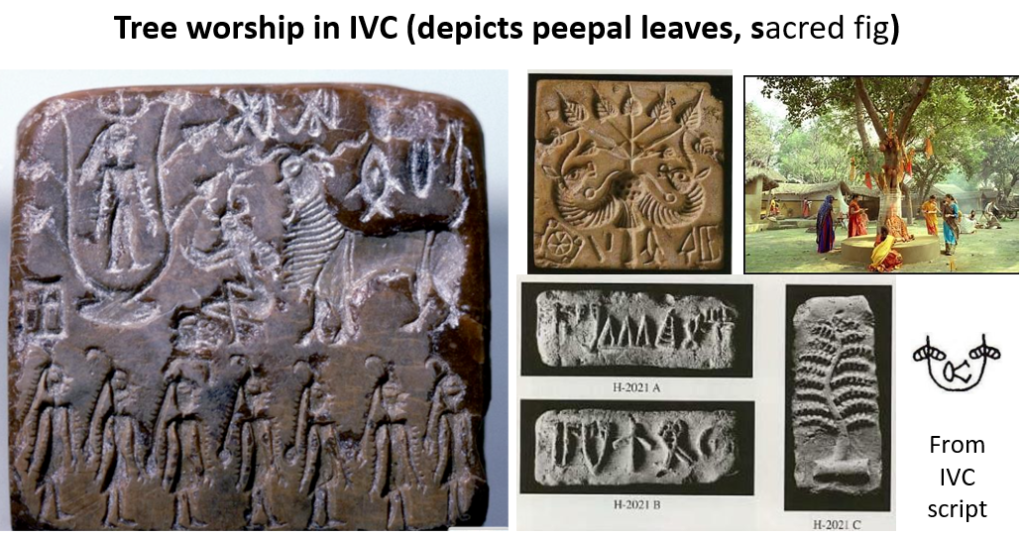
Another popular tradition is worship of trees. In India even today native fig tree known as bodhi tree, peepal tree or asathu tree is continued to be worshiped. Budha’s enlightenment was also under this tree. The leaf of this tree can be seen on the HC seals with female figurine. The leaf is also used in the Indus script as a symbol/letter. Symbolising tree of life or sacred tree resembles those in Mesopotamia.
Message of bones and graves
Graves and Grave goods are another major resource to understand the socio-economic life of a community. They not only throw light on the material culture of ancient peoples but also reveal their spiritual belief system, societal hierarchy, dietary pattern, pathology, cultural contacts, migrations etc. Over 2000 Harappan sites have been found out of which a few hundred burial grounds have been excavated across the region of which few which have been studied are from Harappa, Mohenjo-daro, Kalibangan, Rakhigarhi, Sinauli, Rupnagar, Lothal, Dholavira.
The Harappan burials are classified as:
- Primary or Complete burials
- Secondary or Factional burials
- Symbolic burials with only grave goods
There could be cremation or practice of throwing into the river as sill practiced in northern India. Pot burials is another significant burial found at HC sites either as primary or secondary burial method and similar burials have also been found at Keeladi, Tamil Nadu (~500 BC). Such practices were practiced in Egypt, and at present some naga tribes still practice it. More than 100 pot burials were unearthed in the excavations carried around Harappa.
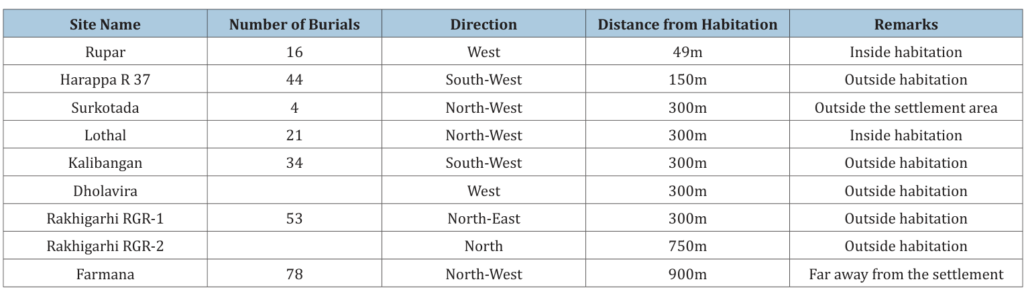
One of the thoroughly studied burial sites is Cemetery R-37 from Harappa. Here out of the 66 surveyed, 16 were from complete burials, 29 were from fractional burials, and 21 were from multiple burials. The preliminary analysis of isotopic signatures in skeletons indicates that individuals buried in Cemetery R-37 shared some aspect of occupational, affinal or consanguineal identity; may represent traders, merchants or craftspeople. Certain sites in Gujarat had capstone over burials, in cases of pot burials show mixed bone remains of one or more individuals in the same pot.
The grave goods consisted of pottery, various personal ornaments: toiletries objects, and some exotic items like handled copper mirrors, mother-of-pearl shells, antimony sticks, shell bangles, necklaces, anklets of steatite or paste beads, copper finger-ring and earrings. The bodies were placed in multiple orientation at the same site which indicates that people with diverse cultural practices lived together. A heterogeneous community of local and non-local individuals diverse in regard to their geographic origins is notice based on strontium teeth analysis. Possible hints of Inter marriage across cultures have also been found in Oman.
No sign of Royalty or Palaces
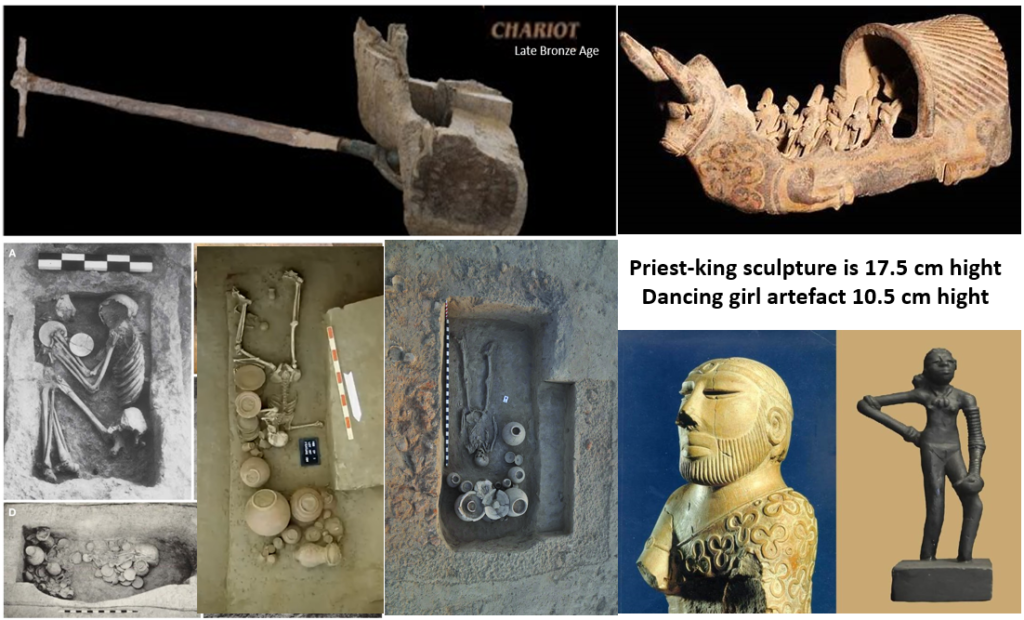
At any civilization the presence of palaces or huge burial treasure is a sign of monarchy. But at Harrapan civilization there is no evidence of any royal tomb or royal palace or any seals with depiction of king. The only promising object is the late Harappan solid wheel chariot from Sinauli probably for show-off by landlord/warlord. The greatest treasure found at any burial site is collection of 70 pots belonging to mature Harrapan phase at Rakhigarhi. No images or sculpture larger than 20 cm has been found. Such finds are minuscule and hardly justifies any indication of Royalty.
Ship building, town planning, market regulation and transportation are enterprise works; without organized structure such industries won’t last long and will quickly disintegrate into independent, unorganized and scattered networks of loosely coordinated independent unplanned towns. The availability of large number of seals suggests strict regulatory system of trade in the region which is the evidence of structured society. All this indicates that it was managed by outside forces or by merchants. Naram-Sin’s claims that Sargon of Akkad captured Meluhha could hint at a type of colonial government ruling from Mesopotamia which was probably captured from earlier occupants of Elam.
Weapons of war and Signs of conflict
Claims of nonviolent society are too premature, similar claims were made about the Mayan civilization in 1990’s back but it turned out to be a violent society with horrible customs. Civilization or culture cannot last long and stay united without law and order and for any organized society they are the key to control or manage. Since there is no sign of monarchy, there is no evidence of large-scale conflicts, yet violence was not uncommon in this region. The sites like Kot Diji, Gumla, Amri, Kalibangan, Rakhigarhi and others were found completely or partially burned. According to Gregory Possehl, out of 523 Harapan sites, 324 were abandoned before mature Harrapan period started. And immediately after that, Mature Harappan phase saw rapid urbanization. Such evidence goes unexplained if we look just as internal Harappan conflict. There is good evidence for regional migration, evacuation and resettlement to other sites with walls and citadels for stricter control during Mature Harappan phase. Colonization by Sargon of Akkad and levying of seasonal tax is a reasonable assumption considering the geopolitics of Mesopotamia at that time.
At Mohenjo-Daro, mass burial of different ages and wounded skulls where found. Mutilated children and smashed heeds were also found at few sites. There is higher ratio of burials of premature children and young women at Harappan when compared with the rest.
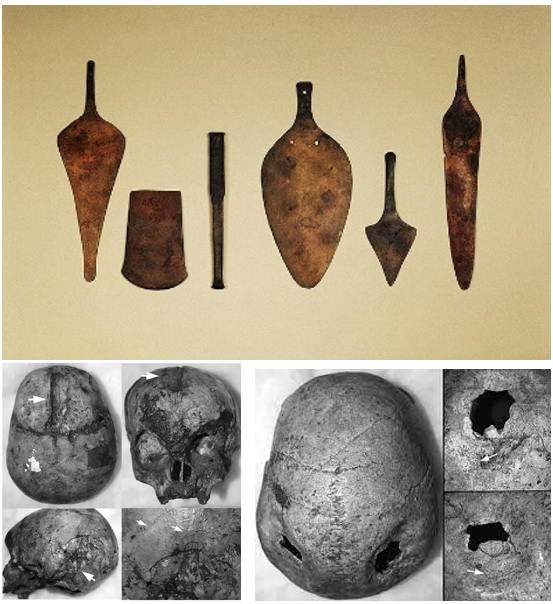
Bronze age warfare: Basic weapons like wooden clubs or stone objects are common, but popular bronze age weapons were spears or daggers, axes or mallets, sickle swords. Various weapons made of brass or copper have been found in HC. Out of all the bronze age artefacts at HC, 65% were tools and weapons. There are burial dumps at one site with wounded men of different age group signifying there were some level of group conflicts and use of weapons.
Absence of Horses or Chariots until later phase
Terracotta figurines of carts and various seals have been found in Harappa and Mohenjo-Daro; shapes depicting the bullock cart and toy bird cart can be seen. Seals with Local animals like elephant, bison, boar, rhinoceros and tiger can also be identified. In spite of various images of birds, animals and humans that found at HC there is not a single depiction of horse or horse-chariots among them (to infer if it’s Vedic connections).
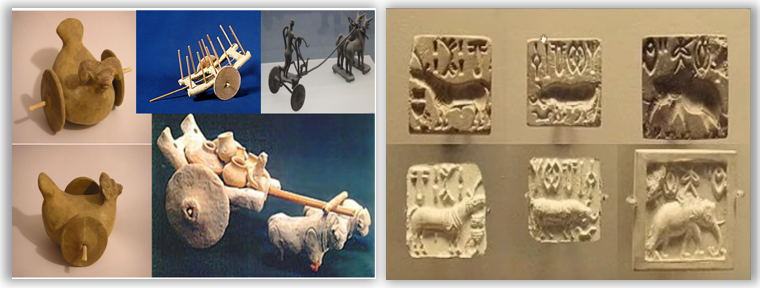
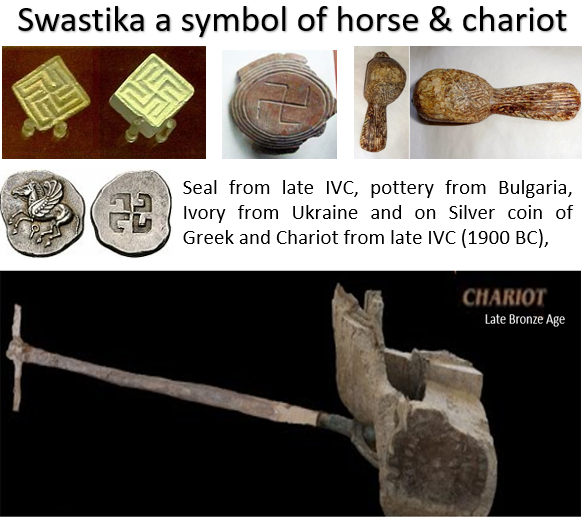
There is neither direct nor indirect depiction of horses in HC until the late Harrapan period. Earliest archaeological evidence of domestic horses and the use of chariots can only be traced to Sintashta Culture that existed around 2800 BC to 1600 BC in Eurasian Steppe. And after few centuries these horses and chariots began to appear in Egypt, Middle-east and later in India as luxury goods among elites. In ancient horse culture like Mesopotamia and Greek; Swastika symbol was commonly associated with horse, wheel or chariot.
The earliest depictions of this symbol were first found in Ukraine and in the mountains of Iran. At HC the swastika and the remains of horse appear by later Bronze Age (1900 BC ~ 1500 BC) when it began to decline. Chariot buried with weapons found at Sinauli and swastika seal in Harappa by late Harrapan phase points to the beginning of the trade ties by Indus valley with the steppes from Eurasia or Mesopotamia. The invention of chariots and the discovery of land routes would initiate the migration of pastoral steppes into South Asia.
Classification of Harappan Timeline:
The excavated Harappan settlements have clearly distinguishable features over time from early settlements to urbanization and later its decline or disintegration. These observations helped to separate the HC into three period to better understand cultural changes in Harappan society. They are:
- Early Harappan Phase (before 2600 BC)
- Mature Harappan Phase (2600 BC to 1900 BC)
- Later Harappan Phase (from 1900 BC to 1300 BC)
The migrating societies initially grouped themselves due to symbiotic needs but later in an effort to optimization they segregated and localized. Urbanization impacts population growth as it always leads to fall in birthrate because of economic constraints. Rural settlements thrived with few specialized skills in early phase but by mid-3rd Millenium BC rapid urbanization and industrialization of the entire region is observed. Cities with walls and citadels at key strategic locations were built across the region to control the trade.
Increase in population density has been observed in mature urban phase with noticeable resettlement pattern as seen from R-37 cemetery at Harappa. But by 1900 BC there were clear signs of societal disintegration due to lack of maintenance which was clearly observed with rise in diseases and internal conflicts.
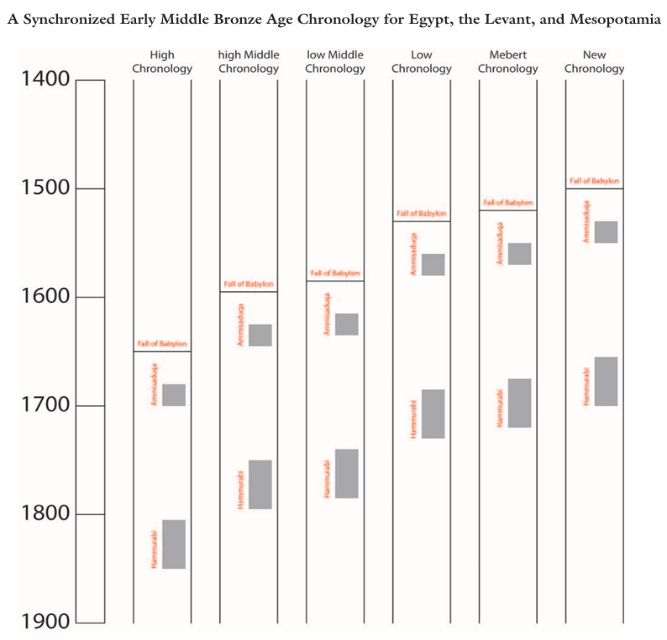
Timeline or chronological discrepancies: The HC timeline was initially synced with the Mesopotamian civilizations to identify its antiquity. But large discrepancies have been observed across different civilization when mapping chronology. Everything before 1400 BC is under question even regarding radiocarbon dating, and a correction of 100 to 400 years is proposed as we go backwards in time. Amarna letters are also upsetting lot of ancient chronology.
Causes for Decline of Harappan Civilization (HC)
HC covered a vast stretch of land up the alluvial plain of the Indus River and Kutch with its tributaries extending around 1,500 kilometres (900 mi) with an area of 1 million km2. This civilization known as Meluhha declined and slowly disappeared from Mesopotamia’s records by around 1900 BC. Cities were abandoned and populations disappeared from this region. These changes occurring over a vast region cannot be due to just one factor like invasion or climate change but a combination of factors. Various causes have been attributed to the decline of Harrapan culture, some of the noticeable causes are:
- Natural Disasters like Earthquake, Floods etc.
- Increased internal problems or civil war
- Famine, epidemics and diseases
The Indus valley region falls under active seismic area. Massive coastline changes have been noticed in this region. A sizeable tectonic shift would cause catastrophic impact on hydro system, and with small change in river course could reshape the landscape. Such changes will impact water supply and will require massive reengineering to meet the needs. The presence of large number of wells would be the consequence of changes observed from the middle of the Mature Phase to the end of the Late phase. At Mohenjo-Daro there are signs of destruction due to floods no less than 7 times.
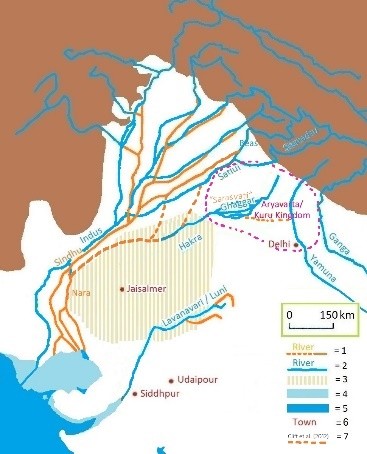
The presence of marine fossils including whales in Thar desert and salt pits at Rann of Kutch (formed in 1819 earthquake); all attest to a massive change in shorelines. Resulting in drying of Ghaggar-Hakra river basin and subsequent desertification.
In late mature phase (2200–1900 BC), the archaeological evidence suggests a massive population growth at site of Harappa in all areas of the city. The refuse dump accumulated on Mound AB indicate disorganized densely populated settlement of the city implying lake of proper maintenance an indication of division in local authorities. The scarcity of resources will also have impact on the administration, and with lack of maintenance there is increased chances of contracting diseases. Due to lack of resources the city began to dwindle creating impression of ghost towns eventually deserted by everyone. Most of these early cities were built on plain so, local population regrouped and readjusted to changes which are reflected in the material culture known as the ‘Cemetery H Culture’ in the Punjab, ‘Jhukar Culture’ in Sind and ‘Late degenerate/Post or Late Harappan Culture’ in Gujarat (Western India).
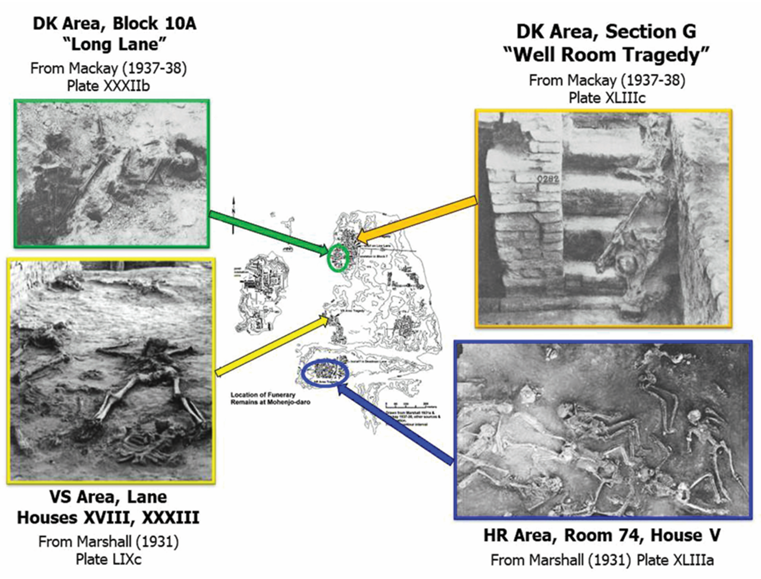
Recent paleoclimate reconstructions from the Beas River Valley demonstrate hydro-climatic stress due to a weakened monsoon system. These changes could have fuel famine or drought creating resource shortage whose impact will be first felt at urban centres. Changing food habits under limited resources, degrading sanitation due to overcrowded cities and the heterogeneous community are all factors for rise in conflicts. There are clear sign of extortion by overseers. Skeletal material from Harappa demonstrated injury such as cranial trauma indicate violence was part of life in ancient city and that the prevalence of violent injury increased through time along with the social-economic change in the Late Harappan period.
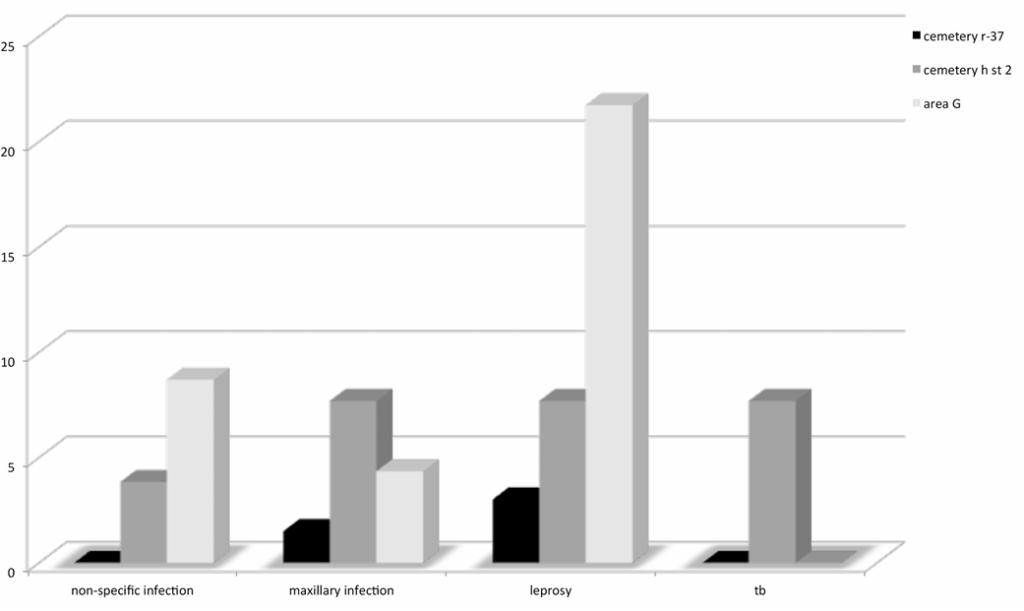
Also, by the Late Harappan phase, leprosy and tuberculosis affected 15.4% of the individuals buried at Cemetery H and leprosy affected 21.7% of the Area G specimens. Signs of malaria, maxillary sinus infections, and non-specific reactions are also noticed.
All these factors initiated the decentralization of urban areas; diminished their size after later bronze age as the people moved to more safer places migrating eastwards and southwards. However, small settlements continued and even increased in many parts of northwest India, which may be evidence of rural resilience that carried through urbanization and deurbanization.
Earliest Means of Migration
Migration of large population requires efficient and reliable means of transportation. The main means of transportation in ancient world were:
- On Water by Ships/Boats (limited)
- On land by wheels (carts or wagons)
Rivers and seas would be most convenient means of transport in the ancient world until the invention of wheels and discovery of roads. The same is seen in the ancient world as most of the cities of early civilizations are located near water sources and are well connected to each other.
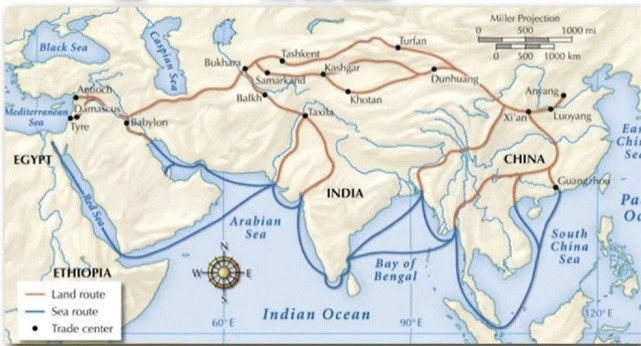
The first migrations could have started when seafaring people exploring in search of minerals or exotic products established settlements along the shorelines or inlands along the riversides. With the introduction of wheels and the discovery of trade-routes, large population could move into these regions easily.
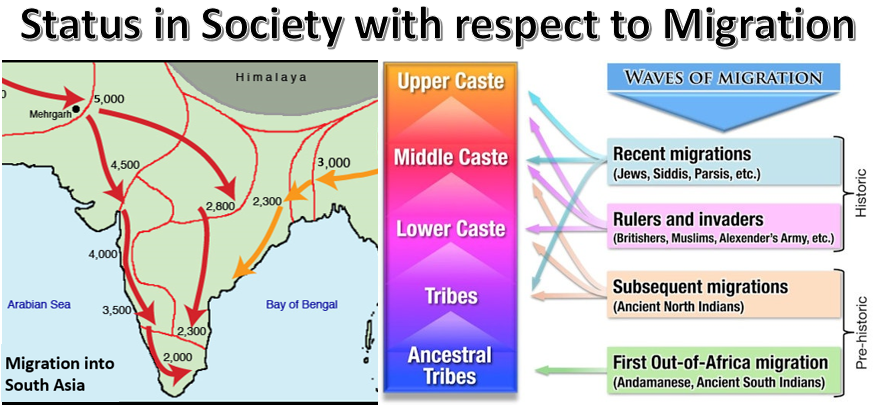
There are only two major land routes to enter into the subcontinent from west/central Asia; the Khyber Pass and Bolan Pass. Parthia fought to maintained control of Khyber Pass to control trade via silk route. All Historical invasions into the subcontinent have always been predominantly through them. And during any confrontation rulers will be killed but intellectuals will be absorbed, but if migration occurs due to natural causes (like famine or epidemic) the rulers and intellectuals move away first leaving the working class vulnerable. Land migration needs a lot of topographical knowledge and any migration by land into subcontinent could have only begun around 1st Millenium BC.
Tracing deurbanization and migration of HC
By the end of Mature phase many small sites replace large sites which can be attributed to the movement of population from urban centres into villages. Also a noticiable changes has been observed in the density of the HC sites by the end of the Mature phase (1900 BC). For example, the sites around Ghaggar-Hakra river disappeared whereas new sites emerge in the upper Ganges reaches. By 1500 BC, most of the Baluchistan and Punjab sites have also disappeared, while sites in Gujarat and along the Ganges remained. Even the Gujarat gatherings began to disappear by 1000 BC. There is now incontrovertible archaeological evidence that the major population shift happened from Gujarat to the southeast into the area of the Kathiawar peninsula, north of Bombay which are some of the distinct and recognizable chalcolithic culture of Central India.
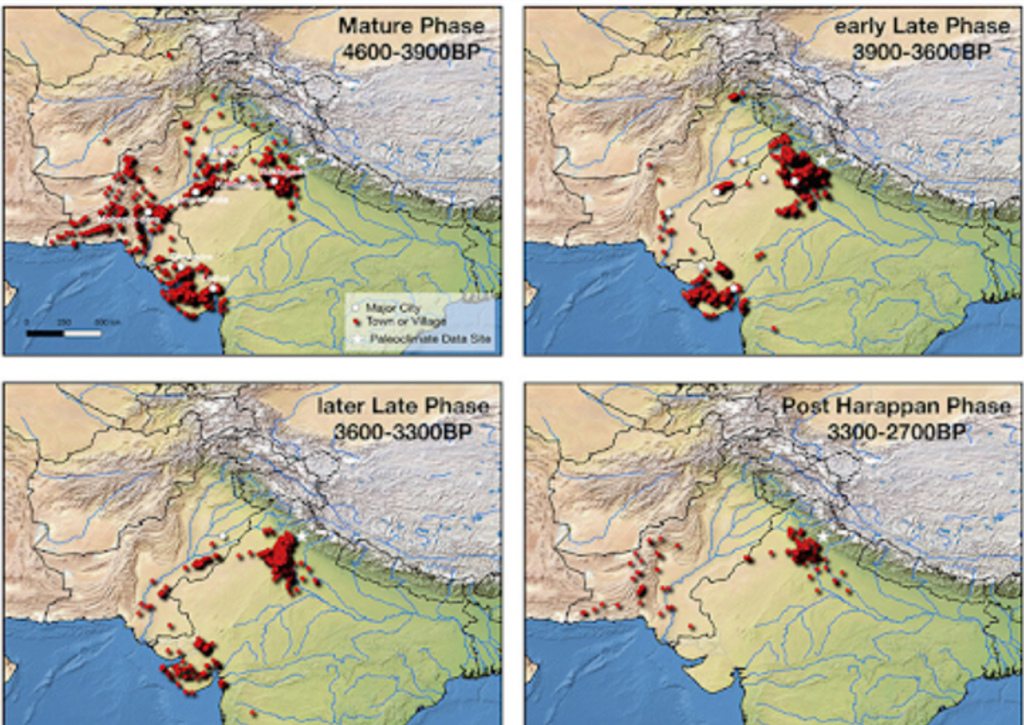
The elites would have fled in ships but the remaining will move inland like into Gangetic plains or into Central and Deccan India which could have been already known nearby resourceful alternative sites. Rural settlements were more adaptable to changes, urban will be more fragile due to lack of administration and disintegrate quickly. Some eventually even pushing into the forests known at present as scheduled tribes.
Note: Bahmani sultanate clime their ancestry to Sassanids (from Bahmani, Iran). Most of the Islamic rulers have links to Turkish, Mongolian or Persian royal families. Similarly, we see Indo-Greeks, Indo-Saka and Indo-Parthian kingdoms connect back to Greeks, Scythians and Parthians royal families. And some of the local kings of India trace their linage to moon/sun dynasties of Brahminic epics linking to Magadha Kingdom. One thing we can notice clearly is that royal bloodlines continued irrespective of regions.
Genetics Roots of South Asia
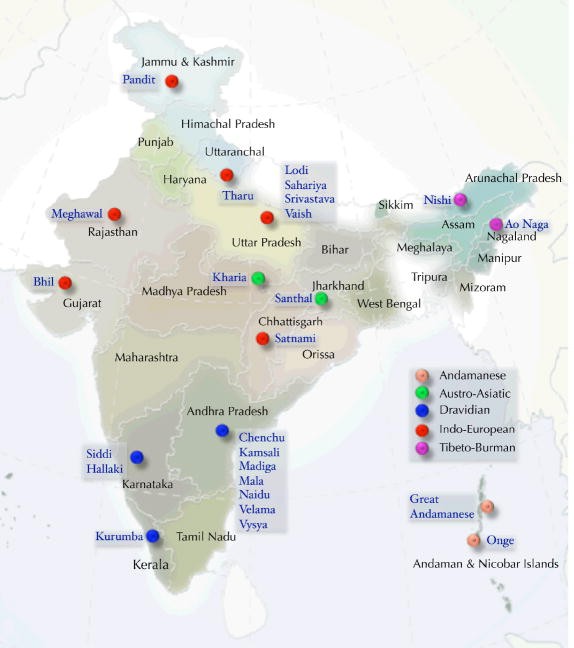
The advances in genetic technologies the distribution of populations and their associations with other cultures is coming light. The study of distribution in Indian subcontinent has identified two distinct groups known as “Ancestral North Indians” (ANI) and “Ancestral South Indians” (ASI). ANI is genetically close to Middle Easterners, Central Asians, and Europeans and the genetic ancestry markers range from 39-71% in India, and is higher in traditionally upper caste and Indo-European speakers. Whereas ASI is distinct from ANI made up of ancient Iranian hunter gathers and Austro-Asiatic DNA. Over the centuries there is intermixing and assimilation of ANI into ASI.
DNA analysis suggest that major ANI-ASI mixture occurred in the ancestors of both northern and southern Indians 1,900-4,200 years ago. There is a clear gap of around 30 generations between ANI (mostly Indo-European) and ASI (mostly Dravidian) which indicates there was a pause in migration for few centuries before ANI entered the subcontinent. Also, the ancient DNA of people from around IVC show ~50–89% ancient Iranian hunter gatherer DNA and ~11–50% native southeast Asian hunter gatherer DNA.
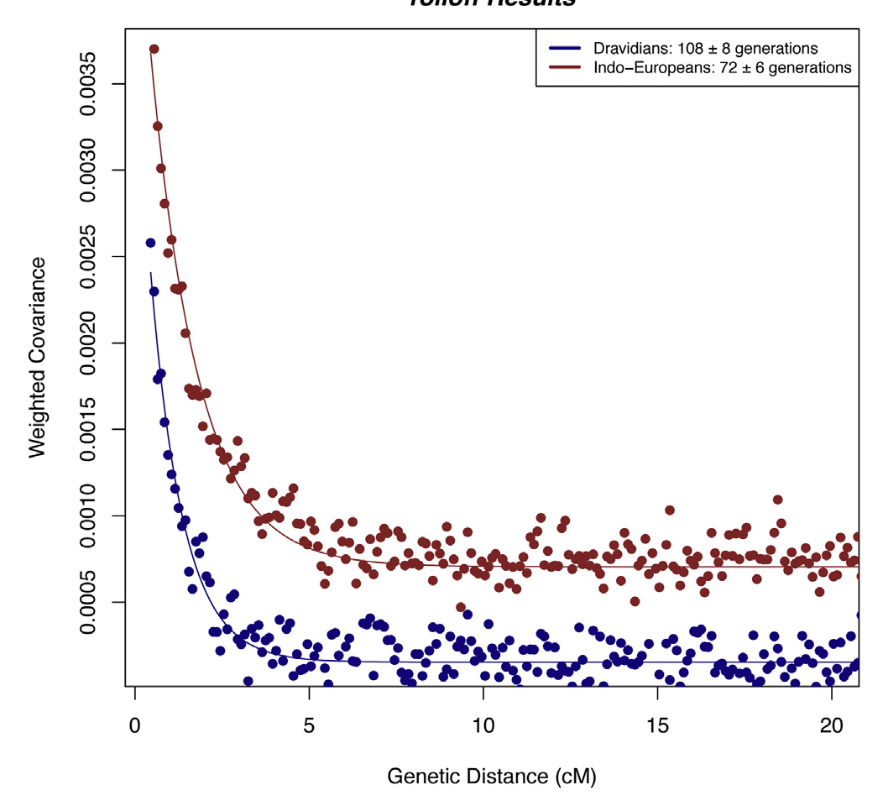
These genetic studies support the Elamo-Dravidian connections.
Elam’s influences on Harrapan Civilization:
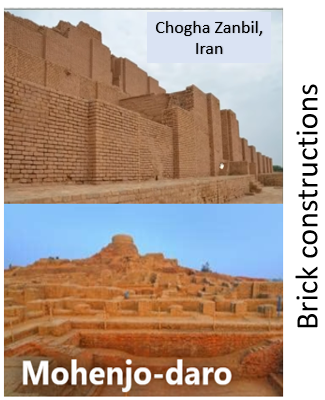
In the ancient times maritime trade & exploration, stretched and expanded whole of south-east Asia. Here are few interesting facts about the similarities between Indus Vally and Proto-Elamite culture that can be noticed in their architectural style and writing script. For example, consider brick constructions from ancient Elam; they look similar to that of Harappa and Mohenjo-Daro. Outside of the HC baked brick technology appears in Susa belonging to Proto-Elam period.
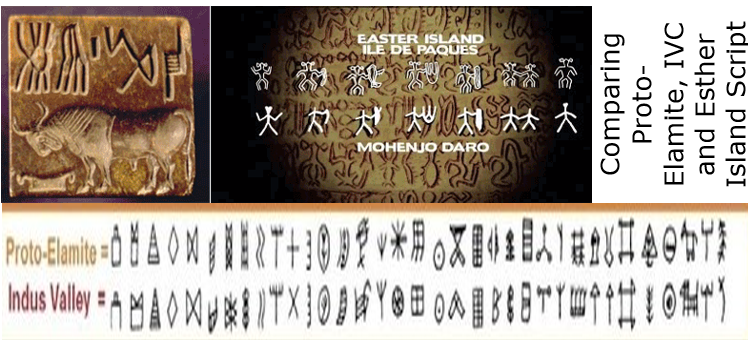
There is a considerable overlap of symbols used in the Proto-Elamite script and the Indus Vally Script. These similarity between the two are noticeable and are in agreement with the other evidences. Indus script also looks similar to the Esther Island script (1200 AD). Even though both the scripts are still undeciphered there is an effort to unlock old Elamite script by tracing backward from known Akkadian script with the help of Bilingual inscription of King Kutik-Inshushinak.
The recent archaeological, linguistic and genetic evidence that are surfacing from IVC supports the claim that they were related to Elamites. And their similarities can only exist when the ruling elites were dominated by Elamites. As the cities grew, servants and other labours might have been brought into this region. There could be settlements by other trading nations also but till now all the inscriptions found for this period were in Indus script.
Tracing Dravidians linguistic roots to Elam
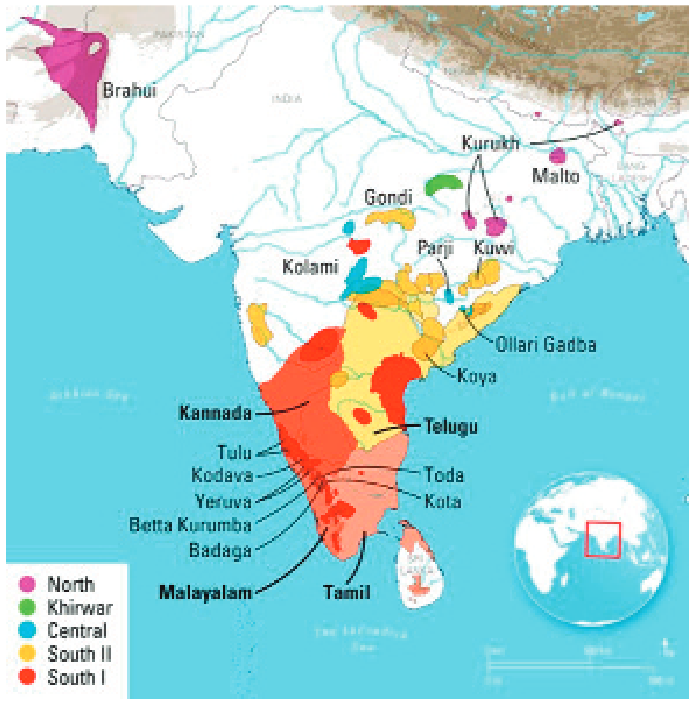
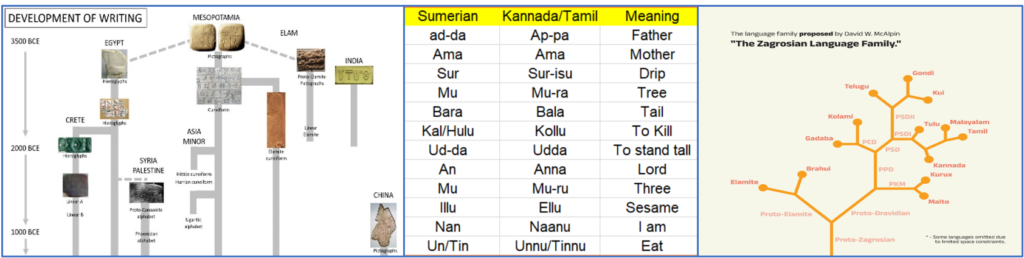
Dravidians (ASI) are an ethno-linguistic people group, now predominantly dominating southern parts of India. David McAlpin In his book “Proto-Elamo-Dravidian: The Evidence and Its Implications” has identified many words from South India that sound similar to Elamite words.
Many of these linguistic connections have been observed by the analysis of the Aramaic, Sumerian and Dravidian language to find the link between HC with Elamite culture. McAlpin identified similarities in primary words between Elamite and Dravidian languages, along with the second-person pronouns and parallel case endings. They also have a number of similar derivatives, abstract nouns, and the same verb stem + tense marker + personal ending structure. Linguistic research is extending more credibility to support that Dravidian languages are extension of Elamite tongue.
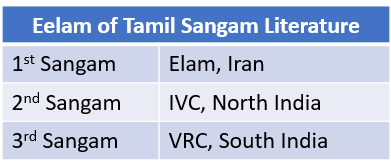
Another linguistic source is the Sangam literature in Tamil written around 100 BC to 200 AD. The literature mentions there were three Sangam’s (gatherings) of which the first two Sangam literatures are lost and only the third Sangam works are preserved. In some of the Sangam literature there is the memory of their motherland cited as Eelam. A remarkable similarity in the structural construction of the Sumerian temple hymns and the poems of the classical Tamil Sangam Period have also been noticed.
Dark-Ages of South Asia (1500 BC to 500 BC)
Harappan civilization which was so robust and organised cannot cease to exist without leaving any influence on the succeeding generations. After 1900 BC, the trade network collapsed and weights were disused; large cities were abandoned and baked brick manufacturing stopped; shell ornaments and seals were disused, and settlements moved east-wards into the Ganges valley. Sites in Gujarat seem to last longest, but by 1300 BC only few scattered sites remain of the HC. After the fall of Harappan Civilization there is complete silence in written records until the time of Ashoka (3rd century BC). This gap is also confirmed by the generational separation of ANI and ASI in the Genatic chart which indicates very little migration into the subcontinent during this period.
But there are some observable indicators of the movement of rural population from the earlier settlements and moving inwards to a more secure place like into Gangetic plains or deccan regions.
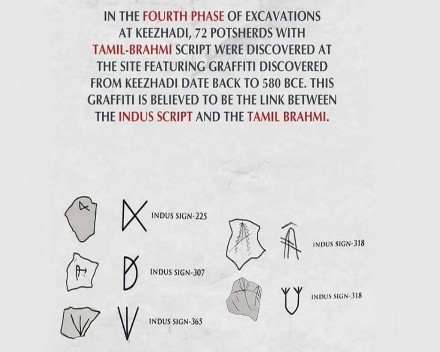
In the recent excavations, artifices unearthed in Keeladi, Tamil Nadu, South India (called now as Vaigai riverbed civilization) has revealed more information about the post-IVC migration. The graffiti discovers in Keeladi dating back to 580 BC closely resembles that of Indus script, implying that after the collapse of the HC elite groups moved to the South. These observations collaborate with the linguistic and genetic studies.
Traditions of Harappa in ASI admixture
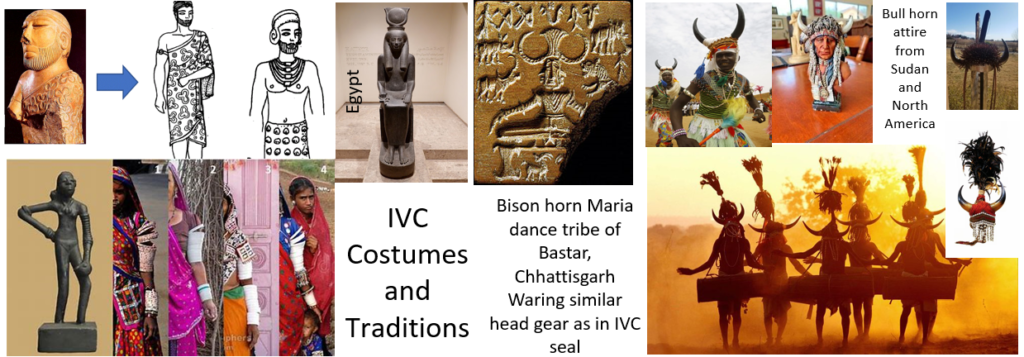
There is 4000 years of time gap from now to HC; yet we can see some striking similarities in the remote tribal practices. Even though there are variations in the tribal customs we can still notice their impact on religion, witchcraft, medicine, clothing etc. Traditional bull fight known as Jallikattu in Tamil Nadu can be seen on HC seals. The headdress which looks similar to that of Pasupathi seal is still dress in Madia Gonds (Madia or Maria) one of the Gond tribes living in Bastar, Chhattisgarh as part of ghotul celebration. Communities like the Bhil’s and the Naga’s still practice traditions of waring bangles and cowries like that of the HC dancing doll. The genetic studies of major Indian tribes like Bhil, Kol and Gond have shown 60-70% ASI admixture. Similarly, Naga’s practice of port burials and dressing appear same as HC. These similarities hint that Laborers with rich knowledge of the subcontinent but with little writing skills migrated inwards building new settlements (unplanned/unorganized).
Anthropological analysis: Bhil (known as bow in Kannada) is the 2nd largest tribe in India. They could be hunting tribes of HC, and because of their skill they survived in harsher conditions and need not migrate far. But farming communities must have moved into more fertile regions and since they lack proper tribal structure, they are prone to adapt with new cultural changes loosing early traditions. The reason for acquiring significant Indo-European words by north Indian tribes compared to south Indian tribes depends on people concentration and cultural interaction. The large HC population did not lose the root words.
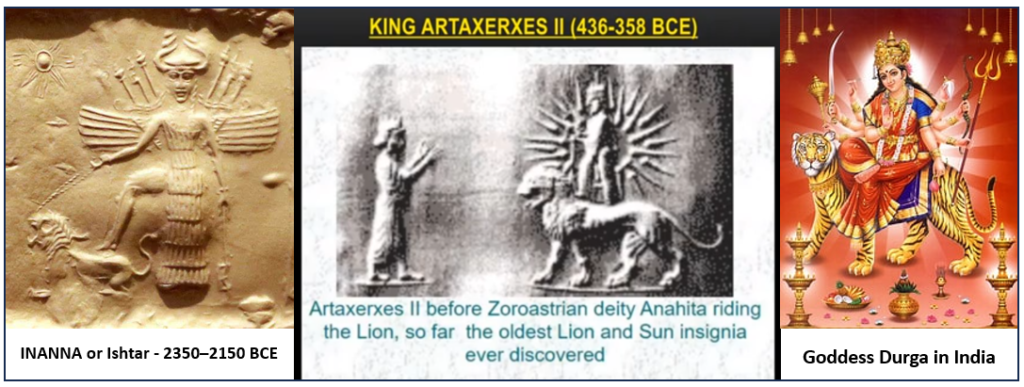
Durga is another example of Aryan version of east and south Indian deity (of ASI admixture). Inanna or nana and Anahita which are a symbol of Virgo functions as mother of city or nation. It could probably be a custom from early Sumerian rationing and harvest festivals. When migrating groups met; deities with similar characteristics got noted and with time clubbed. A hint of which are alluded in Rabatak Inscription of Kushan emperor Kanishka.
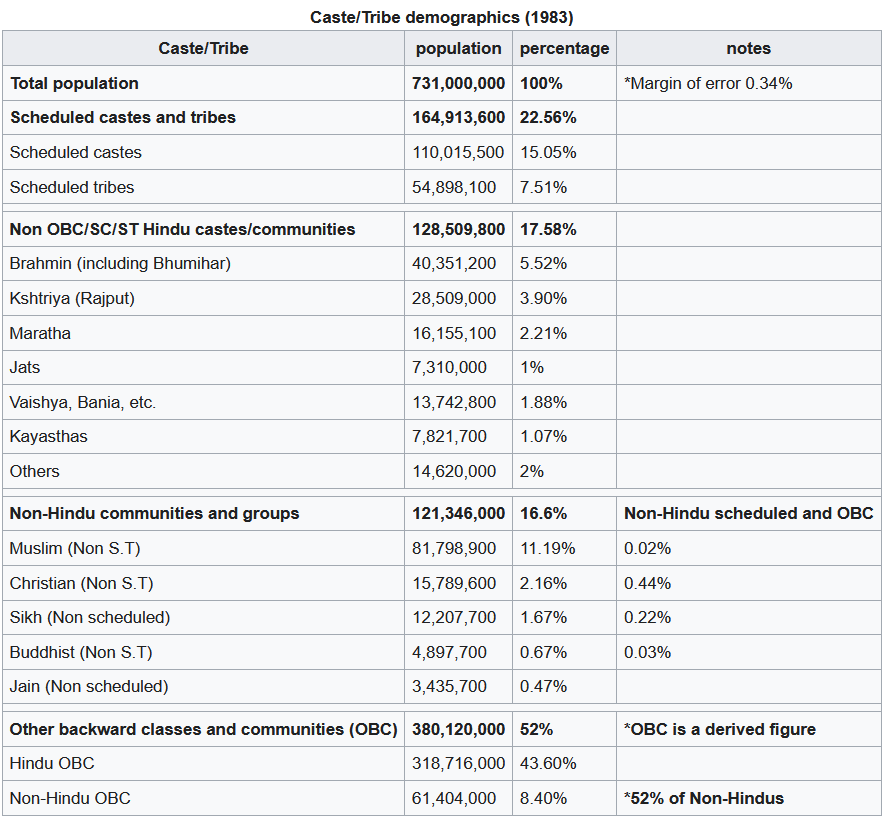
Demographic distribution of Indian Population: Mandal commission report released in 1983 showed that around 22 % of Indians belonged to ST/SC and the Aryans (Non-OBC) are around 18%. Other backward classes constituted around 68% of Indian population of which major part falls in ASI admixture. This excludes people migrated during Islamic Period and later colonization. Demographic data confirms that large Indian population is related to HC.
Other Observations
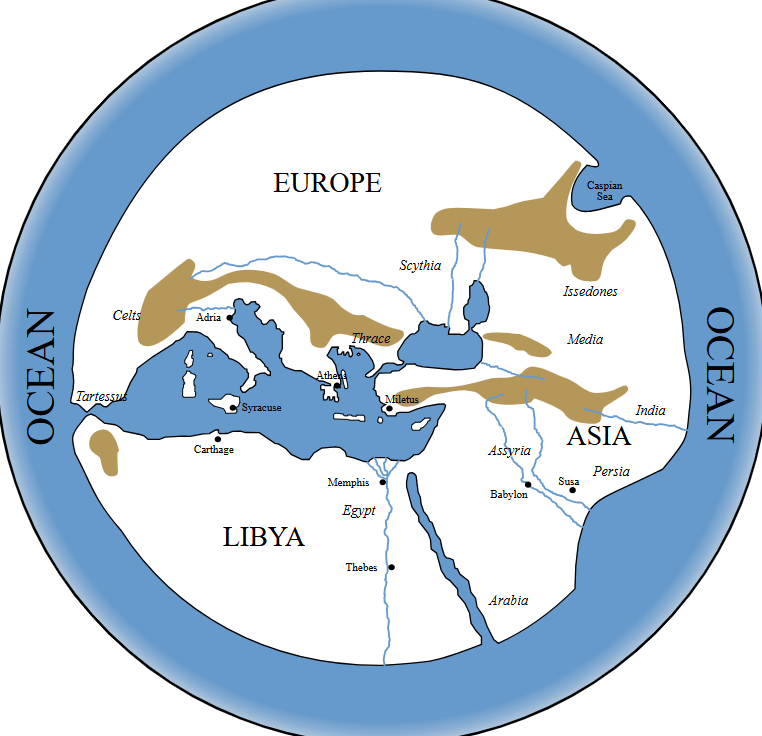
Ancient world had a flat earth paradigm, and the earliest maps only covered immediate regions around Mesopotamia as can be seen in the Babylonian world map, known as Imago Mundi (600 BC). Ancient world around the fertile crescent (levant) was experiencing famines and dust storms round 2000 BC to 1500 BC. The collapse of Akkadian empire, end of Minoan civilization and decline of Harappan Civilization belong to this period. Significant topographic change has been observed like drying of Wadi al-Batin in Arabia.
According to Immanuel Velikovsky there are documented global upheavals with cataclysms events around the world in Patriarchal Period (21st to 19th century BC), Exodus Period (14th & 15th century BC) and Isaiah Period (8th century BC). Babylonian copy of Sumerian tablet K8538 documents the world’s first scientific documentation on approach and terrestrial impact of a large comet on Earth around 2200 BC. The aftereffects like draught or famine could trigger mass migration. The residue of massive sandstorms across the Fertile crescent to Persian Gulf have been found belonging to the end of the second Millenium BC.
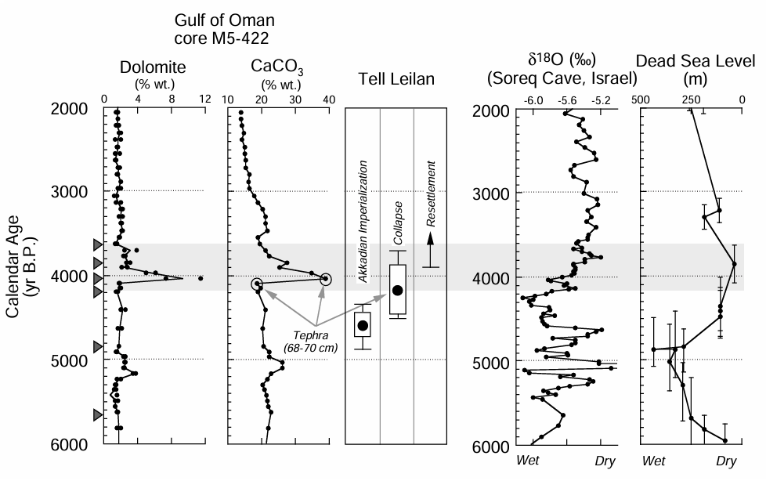
Holocene changes have been documented using mineralogic and geochemical analyses of a marine sediment core from the Gulf of Oman for regional aridity, which is the impact of direct downwind of dust source from Mesopotamian archaeological sites. This is one of the reasons Amorites migrated towards Cannan after the fall of Akkad.
Similarly, Palatines and sea people entering Cannan after the fall of Minoan civilization in Crete. These global changes could also have triggered the drying or shifting of ghaggar-hakra river source and initiate desertification of Thar region. Environmental changes like these would have forced people to move further inland into Gangetic plains.
Signs of Colonial Administration
Town planning and Ship building are cooperative or enterprise initiatives which needs lot of inter-disciplinary skills and coordination. Unplanned settlements cannot develop into a well-designed urban center as any new design changes will be interfering with the existing structures of the city.
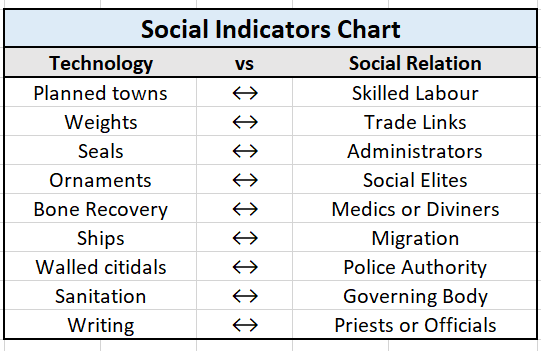
To embark on such huge project, they should have administrative apparatus because in addition to maintaining city they need to maintain trade routes, manage fleets and coordinate with resource requirement. Industries like brick making, bead manufacturing, pottery along with agriculture, textiles and animal husbandry or hunting and fishing thrived during this time.
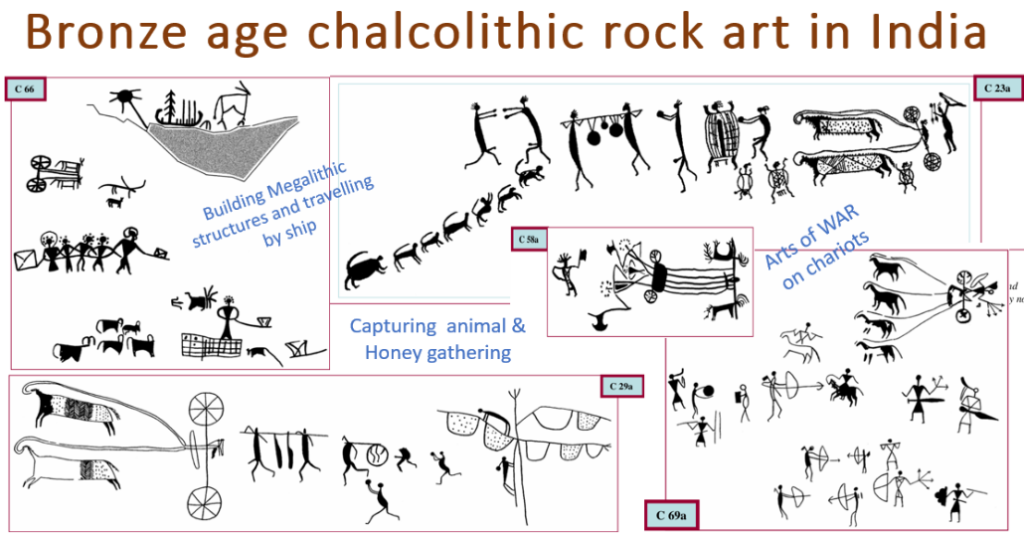
Chalcolithic Rock Art: The art showcases the culture of the time and in the ancient times the paintings on rock by ancient Indians portrays the incidents which have transpired around them. We can notice conflict with bronze age weapons, transport by ships, hunting expeditions to gather honey or catch wild animals, farming and animal husbandry etc. The arrival of spooked wheel chariots and the tribal penetration into central India can also be observed.
Collapse of civil infrastructure:
Mature Harrapan phase saw huge influx of population, Harrapan cemetery identified foreign males but women were local. The same thing is depicted in burial methods that suggests different people groups moved into this region and married local women. The presence of multi-tiered hierarchy of settlements affirm that they were engaged in different economic, socio-political, and ritualistic activities. Based on Pareto principle every society invariably stratifies over a period of time with a few elites at the top. So, when civil order collapsed the administrative educated elite left with their families and servants (by ship which is fastest and convenient means to transport at that time) leaving commoners to take difficult paths. By the end of the mature phase there was huge growth in city population and late phase saw accumulation of garbage dumps an indication that administration has failed. Rising signs of negligence in administrative tasks in turn led to rise in diseases leading to the division in the societies and initiating the migration out of cities. Organized waste management especially for densely populated cities and towns will slowly fail eventually leaving ghost towns.
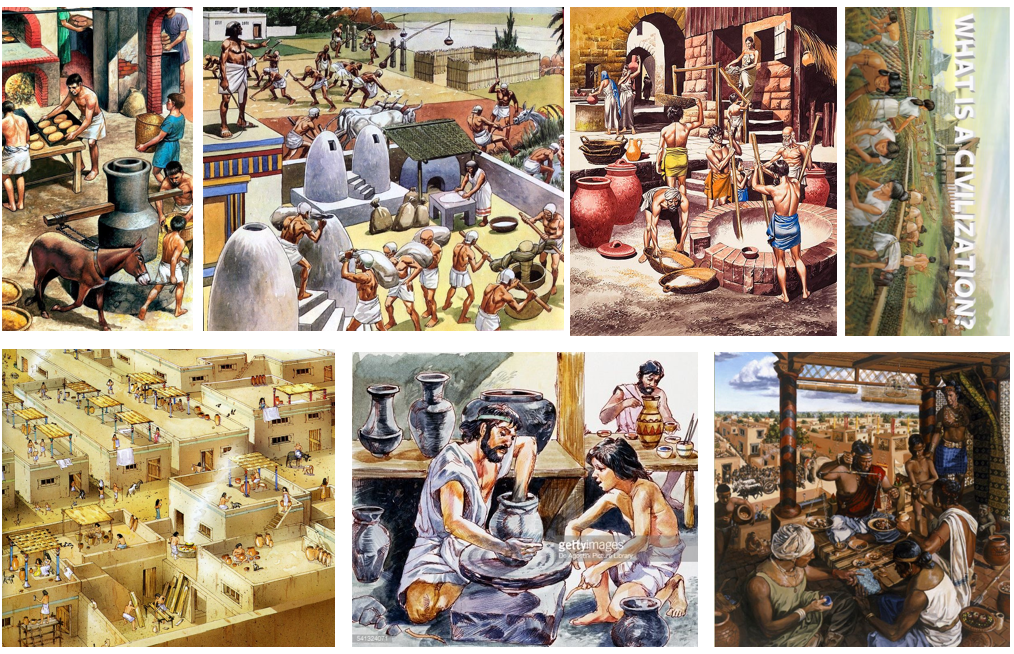
There is indication of destruction of earlier phase cities and rise in strategically placed fortified cities at the beginning of mature Harrapan phase. The existence of non-residential quarters at Harappa and Dholavira also imply large-scale industrial complex and well-organized distribution system for work allocation. Non-residential quarters might operate like hostels or dormitories to control labor market. Some key cities might have functioned as merchant outposts like Tyre or Muziris governed under external authorities.
Also, observation of HC seal development pattern and techniques indicate centralized unicorn seal production. The presence of a tax collecting civil administration is essential for a functioning society. Since we don’t find any signs of royal splendor and considering the influence of Elam and the trade with Akkad and Ur-III we can safely conclude that during mature Phase, HC was colonized and extracted yearly tributes. After Ur III period the region lost its identity in the Mesopotamian literature. This is the same period we notice the beginning of late HC phase when the city-Staes started disintegrating across Indus Valley.
Rise and Fall of Social Structure
Death or war and its associated reactions maintain common traceable threads over many generations. Psychological effects like hallucinations and wild imaginations, dreams or visions and supernatural experiences of demons or angels are natural in any society, more so in the ancient societies. There were hardly any differences between medics, astrologers and magicians (witchcraft/healers) in ancient times and as knowledge transferred with each generation the stories also continued which can be seen in Sumerian stories, Egyptian papyri or Assurbanipal’s library.
Even Chinese travelers to India carried snake charm texts while returning home along with Buddhist texts. Aryanization of these tribal stories and practices has reduced the ability to distinguish the differences between Aryan and non-Aryan content. Home or a City plays as a safe haven for the week and innocent giving them time to mature. Master of Animals would act as protector of the city becoming the earliest king or chief.
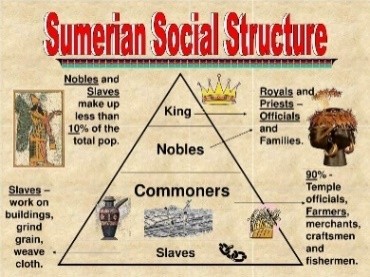
As societies grew, they saw safety in unity and with rising social needs delegated tasks to the most skilled in any field to maximize resource availability. The ration documents of Sumer give a hint at city management and wealth distribution or resource allocation where temple was the center of administration. Mother goddess as the nurturing head of the city began to be identified as caretaker of household (Innana, Nana or Ea). As there was no law, king/chief became the law giver and conflict manager. The concept like El (head/top) or Baal (husband) or Shaddai (nourisher) began to be applied to leadership and later grew into abstract concepts attributing to supernatural entities.
Possible Scenario of parallel history
Below are some of the possible scenarios to synchronize myths and history with the known facts:
Hypothesis A: As city states grow in number in middle east and the need for resources grew and as the elite class (like today’s middle class) craved for exocytic items also grew. New economic opportunities with ability to navigation by ships safely into remote regions permitted deep explorations. Sailors from Sumer and later Elam moving along shoreline identified cultivatable areas and began to establish them. As HC enlarged the Elamite empire setup short term administrative structure which predominantly managed locally but during the time Akkad a formal take-over happened. Initially it began to be used as industrial outpost bringing in new skills into the region and because of its remoteness it was easy to control. With rise in prosperity conflicts also grew which exposed fragility of urban centers. The totalitarian structure are not stable and are bound to failure. Rural structure would be resilient to changes due to strong ethnic bonds and continued to thrive.
Premise: Sargon mentions that he was a son of temple priestess (devadasi) and knew not who his father was. Ur-Zababa the king of Uruk at that time through dream learns that Sargon will kill him and will take over his kingdom. So, to get rid of Sargon he sends him out to foreign lands (Elam) to capture the king. But Sargon easily captures it and upon returning usurped Uruk. Later he expands the Akkadian empire and is known as the first empire builder. Some of the other key facts are:
- The astronomical sign for Hercules and Gilgamesh is same and Balarama’s birth falls in the same period.
- Megasthenes in book Indica mentions that Hercules was worship in Northwest India (300 BC). He also had many children with his consort called Pandaea.
- Saṃkarṣaṇa (later known as Balarama, Zoroastrian Bahram) resembles Hercules.
- Biblical Nimrod is equated with Sargon/Gilgamesh.
- Board game found in Ur cemetery (carved and inlaid with shell and lapis lazuli) resembles Indian game Chauper. Betting was also part of the game.
Enmerkar or Gilgamesh comes in the kings list before Sargon. But we can also consider him as pre-coronation Sargon or Narim sin. Naram-Sin accused Enmerkar not writing the laws correctly which led to the fall of Akkadian empire. Stories of his campaign could have been enacted as popular dramas. Krishna the younger brother of Balaram could be the representative of Saurashtra by Akkad.
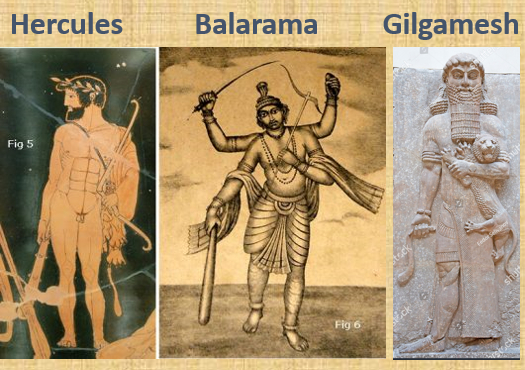
Hypothesis B: Mahabharat an Indian epic could be a drama by local tribes of the campaign of Gilgamesh into Meluhha which was later aryanized by combining other stories from middle east. These stories survived as tribal oral traditions in drama and as time passed, they got mixed with other interesting incidents of local heroes creating the base of these epics. Vasudeva (the Krishna) could be Enkidu (greek Dionysus), who helped Vrishni Heros (the sons of Pandaea) to take control as local heads of five cities. Bronze age weapons like clubs, axes, bows are the common depictions in these stories where chariots were newly introduced.
Balarama is known to have used farming tools in his battels and he is also compared with lion (Narasimha). Different ethnic groups preserved different aspects of the stories of that time, like harvest festivals is the season of resource distribution also associated with new year, summer is the season of hunting, rainy season a period of grooming like Ghotul etc.

Zion, Elam and the Bible
Great battels and spiritual encounters will have lasting impact on subsequent generations and create their worldview. Most of the religious philosophies of today do find their origins in bronze age setup and the supernatural or prophetic narrative is built around it. Bronze age laws were popular welfare programs initially updated as individual decrees to safeguard it from narrow ended priesthood or aristocracies and defend the week but slowly became national laws that were used to exploit and enslave. Biblical concept of Zion and the prophecies of Elam and Israel have roots in bronze age culture. Indian history is adding much needed links especially to unwrap the book of revelation. Bible is a unique composite, embedding ritual traditions and laws of social behavior in a dramatic context of stories and legends intended to appeal to the widest possible audience. It has proved to be truthful testimony preserved over many generations which is still helping to discover many mysteries.
Biblical Patriarchs lived in those time and the book of Genesis gives the details of Elamites as the descendants of Elam, son of Shem, son of Noah (Genesis 10:22). Abraham’s vision of eternal city (Zion) is a result of some activity in similar city state.
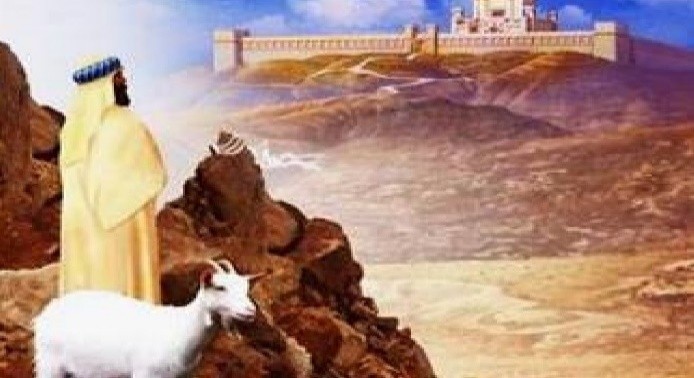
We also see Abraham’s battle against king of Elam Chedorlaomer (Kudur-Lagamar, or ‘servant of the goddess Lagamar,’) and other kings of Mesopotamia. Later Elamites dominated the Tigris-Euphrates delta until Assyrians defeated them.
In the prophetic books of the Bible, God spoke of the destruction of Elam and the scattering of Elamites (Ezekiel 32:24, Jeremiah 25:25 and Jeremiah 49:34-38) into every nation on earth until every prince and king are judged and removed. In the book of Daniel, one of the visions of Daniel was in Elam (Daniel 8:2). And during the return of exiles from Babylon some of the sons of Elam (perhaps symbolically) returned to Jerusalem with Ezra (Ezra 8:7, 10:26) as a sign of future restoration. God specifically Instructed Elam and other neighboring nations to gather troops in the end times and fight against Babylon (Isaiah 21:2). It’s even mentioned that they will participate in the restoration of Israel (Isaiah 11:11). To fulfil the prophesy, God poured Holy Spirit on Pentecost and gave ability to speak various tongues including Elamite to the disciples (Acts 2:9 mentions Parthians, Medes and Elamites). Elam is the only nation other than Israel which is specifically named that will be regather again in the last days and that God will establish his throne in her (Jeremiah 49:38-39).
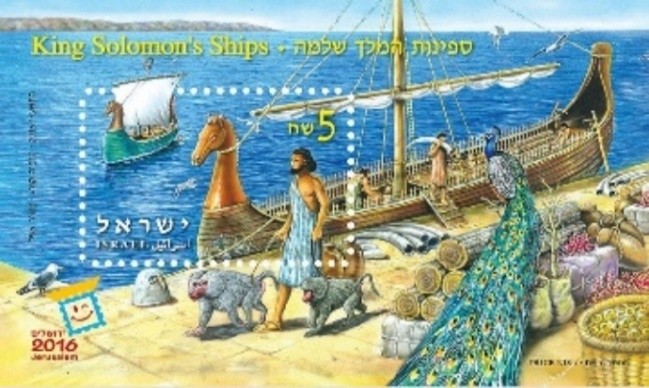
Check the Related Topics
- Medo-Parthian nexus of Avesto-Vedic-Sramana (AVS) Religions
- Behistun Inscription, Elamite Scribes and creation of Brahmi Script
- Indian (P/Bharath), Aryanised Saka’s and the Kings of the East
- Undercurrents of History: Mitra, Tara, Abbanes and others Icons
- True Prophets, Heathen believers and the rise of Monotheism
- Knowing Indian History is the key to unlock Book of Revelation
- Four Wind’s, Harvest and Regathering of Israel (Rom 11 & Rev 7)