Exploring Truth: 3. Michael Heiser
Dr. Michael S. Heiser was an influential biblical scholar who significantly impacted Christian through his academic work and popular teachings by bringing the ancient near eastern context to understanding of biblical passages. He was an expert in ancient biblical languages and is one of the preferred scholars in his field for insights into these languages on the Logos Bible Software program.
Heiser held a Ph.D. in Hebrew Bible and Semitic Languages from the University of Wisconsin-Madison. He was fluent in biblical Hebrew, Greek, Ugaritic, Akkadian, and other ancient languages, allowing him to engage directly with primary texts from the ancient Near East (e.g., Epic of Gilgamesh, Baal Cycle, Enuma Elish) to illuminate the biblical text.
Key Contributions and Ideas
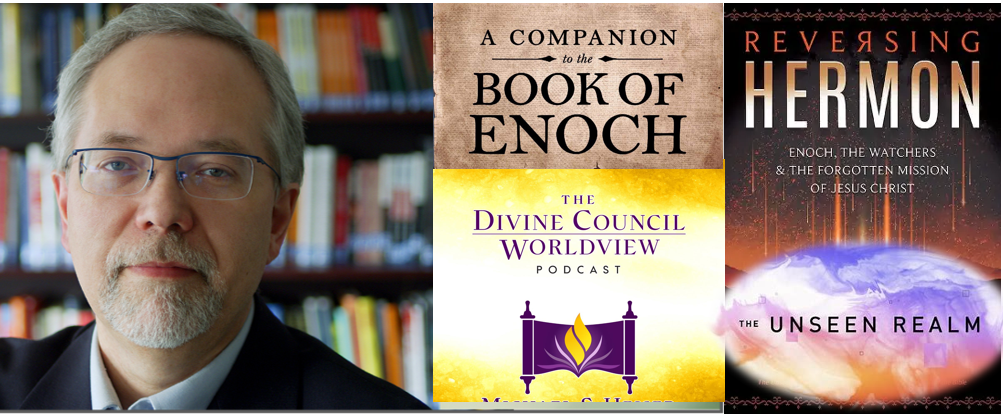
Divine Council of Heaven: Heiser was specializing in the fields of the Old Testament, ancient Semitic languages, and the conceptual world of the Bible. He is best known for his work on the “Divine Council” and the supernatural worldview of the biblical authors, which he brought from the realm of academic journals into mainstream evangelical and popular Christian discourse. It is the idea that God operates within a heavenly assembly of spiritual beings. Heiser’s most significant work was “The Unseen Realm” (2015), the book explores the concept of a divine council in heaven and supernatural worldview of ancient biblical texts.
Heiser presents the case for biblical understanding of heavenly assembly, presided over by God (Yahweh), and comprised of other divine beings (called elohim, “sons of God,” “holy ones,” etc.). These beings are not mere angels but powerful, delegated spiritual entities who administer God’s authority over the nations (e.g., Deuteronomy 32:8-9, Psalm 82, Daniel 7, 1 Kings 22:19-23).
Reversing Hermon: This examines how the New Testament writers understood the story of the “sons of God” in Genesis 6:1–4 and its elaboration in 1 Enoch. In Jewish tradition, Mount Hermon was the place where the Watchers descended, leading to the birth of the Nephilim and the spread of corruption in the world. This episode was seen in Second Temple Judaism as a root cause of evil, demonic powers, and idolatry.
Book highlight Jesus’ mission as not only about forgiving human sin but also about undoing the damage of the Watchers. Through his death and resurrection, Christ triumphed over the spiritual powers tied to this rebellion and restored humanity’s destiny. Heiser highlights passages like 1 Peter 3, 2 Peter 2, and Jude, showing how they reflect this Enochic background. In this way, the gospel is framed not just as personal salvation but as a cosmic victory over the corruption.
Angels, Demons and UFO’s
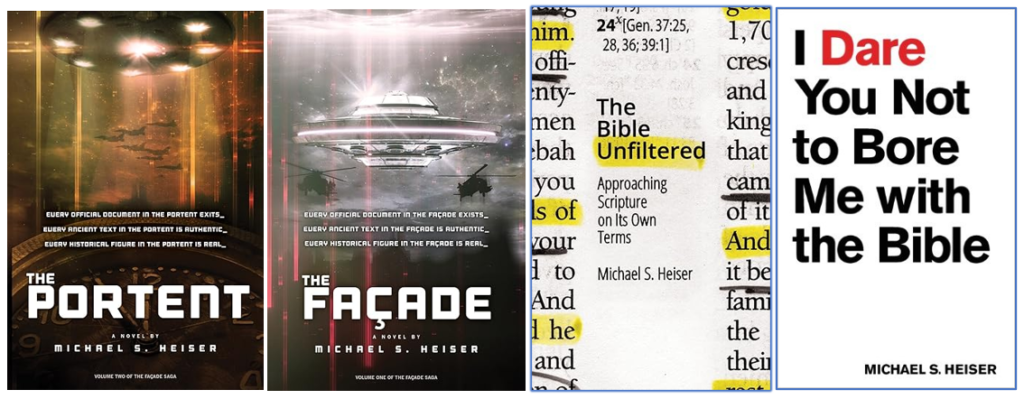
Heiser’s work is characterized by a rigorous, scholarly approach that challenges traditional, often oversimplified, readings of the Bible. He insisted on reading the text through the eyes of its ancient Israelite authors, not through a modern, Western lens. Beyond classical theology, Heiser engaged with modern UFO and alien phenomena. As a scholar who worked with Logos Bible Software and later contributed to research groups, he argued that much of the UFO narrative parallels spiritual deception. While open to the reality of unexplained aerial phenomena, he cautioned against interpreting them as extraterrestrial visitors in the conventional sense. Instead, he suggested these encounters may overlap with the biblical category of spiritual intelligences beings that can mislead humanity away from God. Through books like Angels, Demons, and The Unseen Realm, along with podcasts and interviews, Heiser left a unique legacy of connecting ancient biblical cosmology with contemporary questions about the supernatural.
His work has been profoundly influential, giving many Christians and skeptics alike a more coherent, ancient, and theologically rich framework for understanding the “weird” parts of the Bible. He is remembered as a bridge-builder between the academy and the pew, a fierce defender of reading the Bible on its own terms, and a thinker who profoundly changed how a generation of readers understands the supernatural worldview of Scripture.
Public Impact and Legacy
While his work was academically sound, Heiser’s greatest impact was as a communicator. Through these platforms, he made complex biblical scholarship accessible to lay audiences, earning him a devoted following among Christians seeking deeper understanding of Scripture. He bypassed traditional publishing gatekeepers to speak directly to a popular audience through:
- The Naked Bible Podcast: His long-running podcast where he taught through books of the Bible and explained complex concepts in an accessible way.
- The Supernatural Worldview Seminar Series: A popular lecture series that became a gateway for many into his ideas.
- Books: He authored both academic works (The Unseen Realm) and more accessible books (Supernatural, Angels, Demons: What Does the Bible Really Teach?) that distilled his research.